
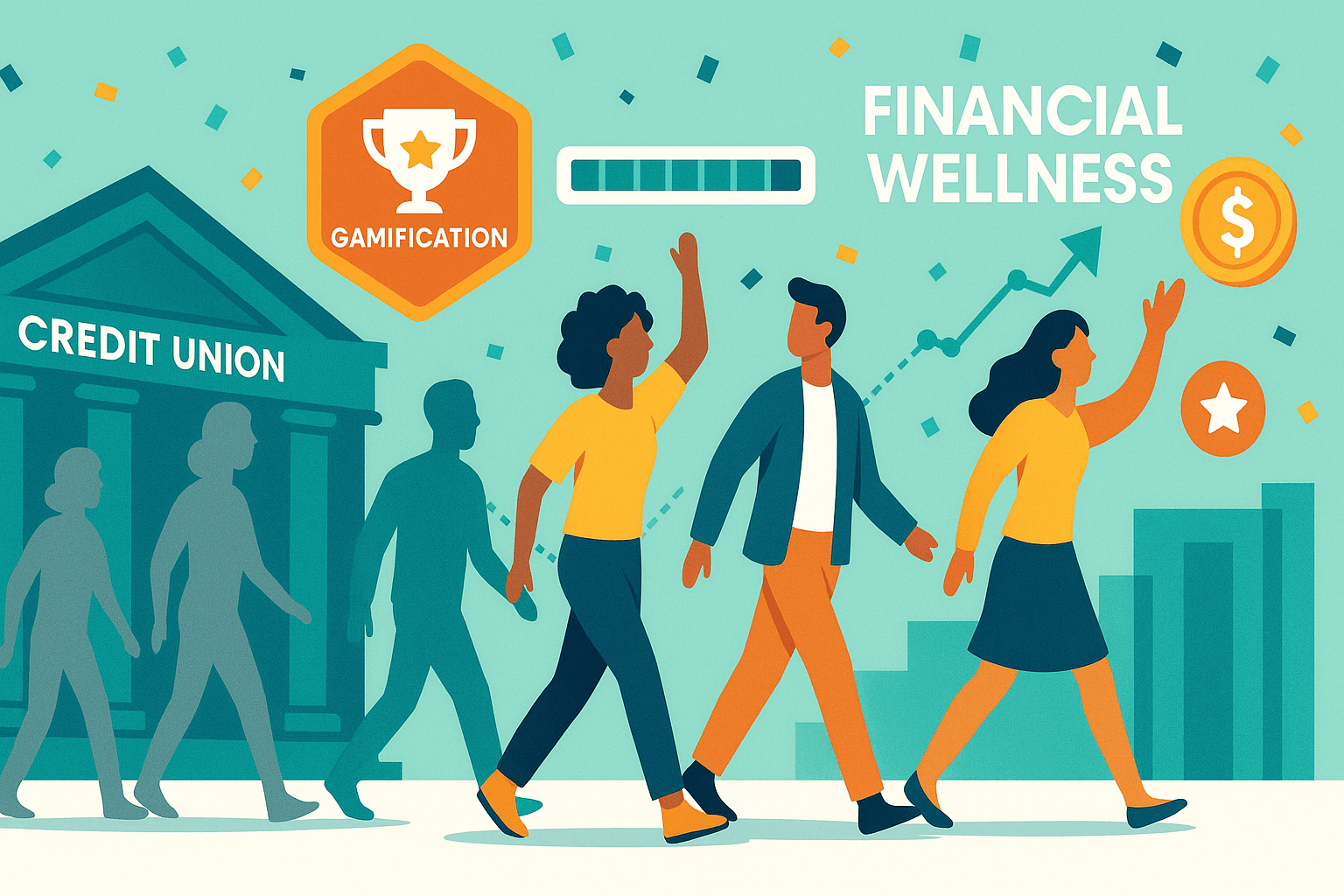
Introduction: Meet “Dormant Dave”
Imagine “Dave,” a member you haven’t heard from in 18 months. He opened a car loan through your indirect lending channel. No mobile app signup. No savings account. No credit card. Just… silence.
Dave isn’t mad. He’s forgotten you.
Gamification and financial wellness programs could change that. They offer credit unions a path to rekindle engagement, build trust, and transform dormant members into lifelong advocates.
1. Why Gamification Works: Motivation Over Transaction
Gamification taps into what drives people naturally: progress, status, recognition, and rewards.
🛠️ Quick Wins with Gamification
-
- Savings Streaks: Reward members for hitting savings goals three months in a row.
-
- Financial Quests: “Complete your emergency fund!” (badges, social recognition, or small prizes)
-
- Referral Leaderboards: Celebrate members who refer friends.
✅ Example Story: The University of Hawai’i Federal Credit Union (UHFCU) rolled out a program where members earned points and rewards for completing educational modules, leading to over 300 organic referrals—proving that education + gamification = viral engagement (CapNexus, UHFCU Newsletter).
✅ Tip: Use Ostrich Challenges to quickly launch savings, budgeting, or credit score challenges that reward progress.
2. Financial Wellness Programs: Education That Converts
Financial literacy isn’t just a “nice to have” — it’s a conversion machine when delivered right.
📚 Templates for Success
-
- 5-Minute Money Tips: Weekly SMS or app notifications
-
- “Budget Your Way to $1,000” Series: Drip campaigns over 30 days
-
- Financial Bootcamp Challenge: Attend three webinars and win a reward
✅ Example Story: Education Credit Union (ECU) celebrated its 90th anniversary by offering free financial coaching sessions paired with cash prize giveaways. Engagement rates spiked, and members walked away more financially empowered (MyPlainview).
✅ Tip: Integrate financial wellness into your app experience with micro-courses that members unlock with every milestone they achieve.
3. Combine the Two: Financial Wellness Challenges
🎯 The Engagement Flywheel
Gamification creates initial excitement. Financial wellness builds long-term value. Together, they create an engagement flywheel.
✅ Example Workflow:
-
- Launch a “$1,000 Emergency Fund Challenge”.
-
- As members hit milestones, unlock short financial literacy lessons (e.g., “3 Tips to Build Your Savings Faster”).
-
- Cross-sell products naturally — offer a high-yield savings account or financial coaching session as the next step.
💡 Real Result: A Raddon Research study found that credit unions integrating financial education and gamified goals saw a 24% lift in app engagement and a 12% increase in new savings account openings (Raddon Research Insights).
✅ Tip: Use Ostrich’s Gamified Engagement Tools to seamlessly combine challenges, education, and rewards.
4. How to Launch a Pilot Program (Start in 30 Days)
🏁 Quick Start Playbook
-
- Pick a Goal: (“Boost app logins,” “Increase savings accounts”)
-
- Create a Mini Challenge: (“Save $100 in 30 Days!”)
-
- Integrate Education: Each week, unlock a short tip or video.
-
- Offer Micro-Rewards: (e.g., $5 gift cards, bonus points, financial coaching session)
-
- Celebrate Success: Feature winners in your email newsletters and social channels.
✅ Key Metrics to Track:
-
- Challenge participation rates
-
- New product openings (e.g., savings accounts)
-
- Increase in app logins or digital interactions
✅ Pro Tip: Start small, iterate fast. Launch > Learn > Expand.
Conclusion: Level Up Your Member Engagement Strategy
Dormant members like Dave aren’t lost. They’re simply waiting for a reason to care again.
Gamification and financial wellness give them that reason — by making banking fun, engaging, and valuable.
Credit unions that embrace these tools will create deeper loyalty, stronger financial outcomes, and long-term growth.
Ready to turn your dormant members into active champions? Let’s make it happen. 🚀